Crypto is no longer a niche corner of trading. Approximately 560 million people globally own at least 1 cryptocurrency in 2026, representing roughly 9.9% of the connected population. With that kind of participation, it’s no surprise that crypto traders are eyeing crypto prop firm trading 2026 as a way to scale their edge without draining personal savings. Yet most assume prop firms are a forex-only world, and that assumption leaves real opportunity on the table.
The crypto prop trading industry crossed $20 billion in 2025 and continues to expand through 2026, with over 60 active firms competing for trader evaluation fees. Choosing the right one, or even understanding how the model works before you commit, separates traders who grow from those who cycle through fees without a clear plan. This listicle covers the 5 things every crypto trader needs to know before signing up for a funded account.
Key Takeaways
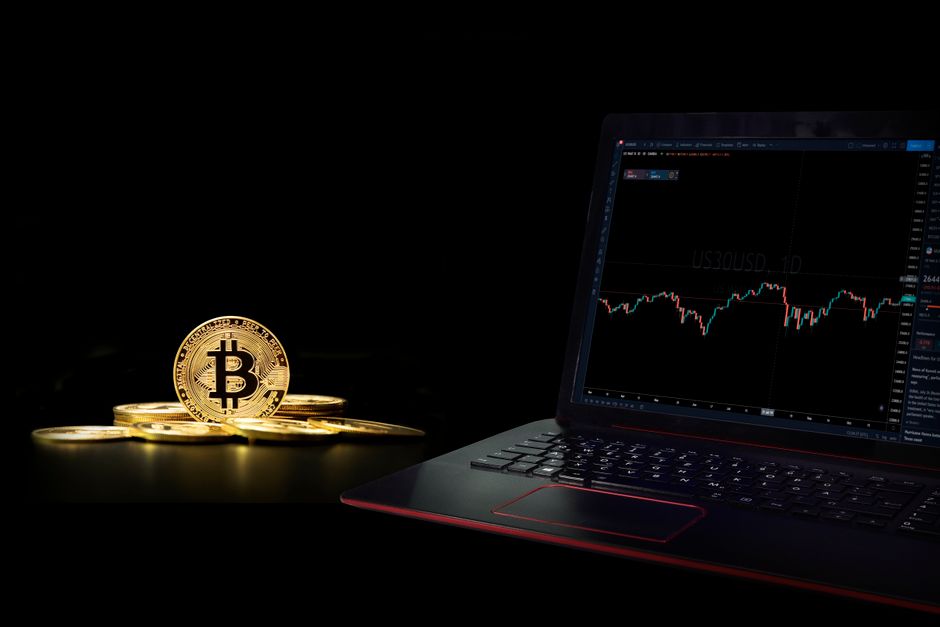
- Prop firms are open to crypto traders: A crypto prop firm is a proprietary trading company that provides traders with funded accounts to trade cryptocurrencies, evaluating them through challenges or assessments so they can earn a share of profits without using their own capital.
- The evaluation fee is your only real risk: You pay a one-time challenge fee, pass a performance evaluation on demo capital, and receive a funded account where simulated profits translate into real performance rewards, typically 70 to 90% of the gains. The fee is the only real money that changes hands on your side.
- Drawdown rules end accounts faster than bad strategy: Crypto prop firm rules include an overall maximum drawdown, a daily loss limit, and sometimes a consistency rule. Most traders fail on the drawdown rules rather than their strategy, because a breach ends the account immediately with no grace period.
- Not all firms include crypto: Many traditional prop firms focus on a single market, typically forex, limiting traders to a narrow range of instruments. Verify the asset list before buying a challenge.
- Firm legitimacy matters as much as the split: Thousands of traders were impacted between 2024 and 2025, with an estimated 80 to 100 proprietary trading firms shutting down, the largest industry collapse in prop trading history. Due diligence before paying any fee is non-negotiable.
Prioritization Framework for Crypto Prop Firm Trading 2026
| Situation | Best Entry Point | Effort Level | Expected Timeline |
|---|---|---|---|
| New to prop firms, trades crypto + stocks | Multi-asset firm (e.g., OneStopProp) | Low | 2 to 4 weeks to funded |
| Experienced crypto-only trader | Crypto-dedicated firm | Medium | 1 to 3 weeks to funded |
| Swing trader who holds overnight | Firm allowing overnight holds | Low to Medium | Varies by cycle |
| Scalper or news trader | Confirm firm rules first | High | Depends on rule fit |
| Forex trader moving into crypto | Multi-asset firm with shared account | Low | Same as forex track |
Start here if you’re:
- New to prop firms and trade crypto: A multi-asset platform like OneStopProp lets you trade crypto, stocks, and forex from 1 account with no time limit to complete challenges and overnight holds permitted, a gentler entry point with fewer restrictions than crypto-dedicated firms.
- A dedicated crypto-only trader: Choose a crypto-specific firm that offers the pairs, leverage, and drawdown model that match your exact strategy. Verify whether news trading and weekend holds are allowed before purchasing.
- Looking for faster payouts: OneStopProp’s Pro Accounts unlock payouts every 5 days, nearly 3 times faster than standard bi-weekly cycles at most competitors.
1. Prop Firms Are Not Just for Forex Traders
This is the misconception that costs crypto traders the most time. The prop firm model did originate heavily in the forex space, but the landscape has shifted sharply in 2026.
How the Model Actually Works for Crypto
A crypto prop firm gives you the firm’s capital to trade cryptocurrency, then splits the profits with you, usually 80% to 90% in your favor. You pay a one-time evaluation fee to prove you can trade within a set of rules. Pass, and you trade a funded account; profit, and you get paid out in stablecoins, often on-chain within hours.
The cryptocurrency market operates 24/7 and is known for high volatility, rapid price movements, and a wide range of digital assets. These characteristics make crypto prop trading attractive to active traders, but also require strict risk controls and disciplined execution.
What “Crypto-Inclusive” Really Means
Here’s something worth checking before you buy: if you specialize in altcoins outside the top 20, verify the program actually provides the pairs you trade with sufficient liquidity. Generic “40+ crypto pairs” claims often mean 35 variations of BTC and ETH pairs with 5 random altcoins.
OneStopProp stands out as a genuinely multi-asset platform. OneStopProp offers the full range of trading instruments including forex, indices, commodities, metals, cryptocurrencies, and US stocks on funded accounts with flexible rules and high-performance execution. That means your crypto positions and your stock or forex trades can all live on the same funded account, a setup that most dedicated crypto-only firms simply cannot replicate.
Pro Tip: Before paying any challenge fee, navigate to the firm’s instruments page and count the crypto pairs yourself. If the page lists “crypto” without specifics, email support and ask which exact tokens are available before committing. OneStopProp offers around 30 crypto instruments worth checking.
2. The Evaluation Challenge Is a Skill Test, Not a Trap
Many traders treat the challenge phase with excessive fear, and others treat it with excessive confidence. Both approaches cause problems.
What You’re Actually Being Tested On
The prop firm funding model is built on a “proof of skill” basis. Traders pay an evaluation fee to enter a trading challenge. To pass, you must reach a specific profit target while adhering to daily and max drawdown limits and other risk management rules.
Most traders fail crypto prop challenges due to poor position sizing or misunderstanding the rules, not because they are bad traders. That distinction matters enormously. If your strategy is sound but you have never traded inside strict drawdown constraints, the challenge is your first real discipline test, not a barrier designed to keep you out.
Challenge Formats in 2026
A 1-step challenge typically requires you to make 10% profit, while a 2-step challenge splits it into 8% and 5% across 2 phases, both with a 5% daily loss limit and a 10% maximum drawdown. Some firms also offer instant-funded accounts that skip the evaluation entirely, though these often come with tighter ongoing rules or higher fees.
Passing a challenge comes down to picking rules that match how you actually trade, not chasing the cheapest entry fee. A scalper who joins a firm with a news-trading ban will struggle. A swing trader at a firm with no overnight-hold permission is set up to fail. Match the evaluation format to your real trading behavior first.
3. Drawdown Rules Are Where Funded Accounts Are Won or Lost
In my experience reviewing prop firm structures, drawdown rules are the single most misunderstood element of the entire model. Traders study profit targets. But then they ignore the floor beneath them.
Daily Loss Limit vs. Maximum Drawdown
These are 2 separate rules that operate simultaneously. On a $100,000 account, a 5% daily rule caps loss at $5,000, while a 10% max drawdown caps lifetime loss at $10,000. Hitting either threshold triggers an automatic stop-out enforced by the firm’s risk systems.
Static drawdown stays at a fixed level based on your initial balance, preventing your drawdown limit from moving up when you have a profitable trade. Equity-based drawdown factors in floating losses on open trades, meaning unrealized profit or loss can trigger a breach. For crypto traders dealing with high-volatility assets, the difference between static and equity-based drawdown can mean the account surviving a bad hour or getting closed mid-session.
Pro Tip: Set your own personal daily stop at 60 to 70% of the official daily loss limit. On a 5% daily limit, stop yourself at 3%. That buffer protects you from one bad session ending your entire evaluation.
4. Profit Splits and Payouts Are Not the Same Number
The advertised profit split is only the starting number. What actually lands in your account depends on several other factors most traders don’t read about until their first payout request.
How Payouts Actually Work
A prop firm payout is the cash a funded trader withdraws after the firm applies its profit split, and other gates, to profit from closed trades. Closed trades means positions you have already exited and booked.
The profit split is your percentage of the profits. Common splits are 70/30, 80/20, and sometimes 90/10 in the trader’s favor. But there is often a buffer requirement sitting in front of that split. At OneStopProp, for example, you can withdraw profits after you reach and maintain a 4% profit buffer on your account. On a $50,000 account, the buffer zone equals $2,000.
Payout Speed and Frequency Matter
A trader producing $200 to $500 in daily profit on a $100,000 account accumulates meaningful sums within days, and the ability to access capital every 5 days rather than every 14 means that money is moving nearly 3 times faster. That gap compounds over months.
OneStopProp’s Pro Accounts have a first payout requirement of a minimum of 8 trading days. After the first payout, traders may request a payout every 5 days. That cadence is meaningfully faster than many competitors that lock profits behind 14-day or even 30-day windows. If you’re treating prop trading as a serious income stream rather than a weekend experiment, payout frequency should be part of your firm-selection criteria, not an afterthought.
Pro Tip: Run the math on your realistic monthly return before paying a challenge fee. A 3 to 4% monthly return on a $50,000 account equals $1,500 to $2,000. At a 90% split, that’s $1,350 to $1,800 per month. Know your break-even point before you buy.
5. Not Every Firm Will Still Be Operating When You Want Your Payout
This is the hardest truth in the crypto prop trading space in 2026, and the one most review sites gloss over.
The Industry’s Instability Problem
The crypto prop trading industry grew from a handful of firms in 2020 to over 300 by 2025. Then in 2024, Finance Magnates Intelligence documented 80 to 100 firm collapses. Some vanished quietly. Others disappeared with trader funds mid-payout.
A firm that triggers identity checks only after a withdrawal request is a serious scam warning sign in 2026. A legitimate prop firm names its founders, lists a registered business entity, and provides a verifiable address.
How to Verify a Firm Before Paying
To verify legitimacy, as a trader you should look for transparent profit-sharing models, clearly defined evaluation criteria, positive reviews from sources like TrustPilot, responsive support, free educational resources, and access to reputable trading platforms.
Specific due diligence steps include:
- Look for platforms with payouts proof, specific trader testimonials including amounts and dates, transparent withdrawal processes, and at least 12 months of operating history, these signal genuine partnership models rather than churn-based revenue extraction.
- Check the firm’s instruments page independently, not just its marketing claims.
- Payout delays are the most frequently reported complaint across Reddit, Discord, and independent review platforms. Search if the firm’s has frequent “payout issues” before committing.
Why OneStopProp Earns the Top Slot
Best Overall, Best for Crypto Traders Who Also Might Trade Stocks and Forex
OneStopProp is the Editor’s Pick for crypto traders in 2026 for a concrete reason: it solves the multi-asset problem that most dedicated crypto prop firms create by siloing you into 1 market. OneStopProp eliminates outdated rules and unnecessary restrictions, combining stocks, forex, and crypto trading, overnight holds, no time limit challenges, and fast payouts in a single platform.
OneStopProp lets you trade: forex stocks, indices, commodities, and cryptocurrencies all from a single account, a rarity in the prop firm world. For a crypto trader who also follows macro events across equities and commodities, that cross-market visibility is a genuine structural edge.
The platform is powered by Match-Trader for executions and integrated with TradingView for advanced charting, giving you fast, reliable order execution alongside industry-leading charting tools.
Pros:
- Crypto, forex, stocks, and commodities in 1 funded account
- 100% profit split on first 5 payouts, 90% ongoing
- No-time-limit challenges, trade freely within drawdown limits
- Overnight holds and weekend positions permitted
- Pro Accounts with 5-day payout cycles
- Simple model with access to up to $300,000 in trading capital on a funded account
- You can also access to daily payouts with add-ons
Cons:
- Bi-weekly payout cycle on standard accounts (Pro Account required for faster cadence)
- Newer firm compared to some legacy competitors, track record still building
Get a OneStopProp Pro Account and access crypto, forex, and stocks from a single funded account.

Frequently Asked Questions
What is a crypto prop firm and how is it different from trading my own account?
A crypto prop firm is a proprietary trading firm that provides capital to traders who execute trades on the firm’s behalf, with profits shared between the 2 parties. The trader does not use client funds or their own deposited funds. Instead, they operate under rules and risk limits set by the firm. The primary difference from trading your own account is that your personal downside is capped at the evaluation fee; you are not risking your savings if a trade goes wrong.
How much can I realistically earn from a crypto prop firm?
Prop firms typically pay out 80% to 90% of the net profits generated on the account. On a $5,000 profit month with a 90% split, the trader withdraws $4,500. Realistic monthly returns vary widely by strategy and market conditions. A sustainable 3 to 4% monthly return on a $100,000 account at a 90% split yields $2,700 to $3,600 per month. Scale conservatively, chasing high targets inside tight drawdown windows is a common account-ending mistake.
Can I trade crypto and forex in the same prop account?
Most crypto-dedicated firms restrict you to crypto only. OneStopProp allows you to trade forex, stocks, indices, commodities, and cryptocurrencies all from a single account, a rarity in the prop firm world. If you use correlations between crypto and macro assets in your strategy, a multi-asset platform like OneStopProp is the practical choice. You can explore the full instrument list at onestopprop.com/instruments/.
What happens if I breach a drawdown rule during the evaluation?
The daily loss limit defines the largest loss permitted within a single trading day. Breaching it typically terminates the evaluation or funded account immediately, mid-session, regardless of what happens to the position afterward. The evaluation fee is not refunded in most cases. This is why sizing trades to stay well inside the daily cap, not just under it, is the foundational discipline of prop trading.
How do I know if a crypto prop firm will actually pay out?
A prop firm’s fancy dashboard glowing testimonials, and slick marketing mean nothing if they don’t pay out. In 2026, with AI-generated content making it easier than ever to fake success, the only metric that truly matters is payout proof and verified reviews. This is the ultimate litmus test that separates legitimate partners from sophisticated scams. Look for blockchain-verifiable transaction IDs for crypto payouts, multi-platform independent reviews, and at least 12 months of public operating history before committing any evaluation fee.
Ready to Start?
If you trade crypto and have been assuming prop firms are a forex-only world, 2026 is the year to rethink that assumption. The model has matured, the asset coverage has broadened, and platforms like OneStopProp have been purpose-built for traders who move across markets. Start with a firm whose rules fit your actual strategy, run the payout math before you buy the challenge, and treat drawdown limits as your first risk management system, not a technicality to work around.
Get your OneStopProp Pro Account here, and trade crypto, stocks, and forex from a single funded account.
Sources
- Cryptocurrency Market Size 2026, Mordor Intelligence. Market size, CAGR projections, and retail vs institutional user breakdown. https://www.mordorintelligence.com/industry-reports/cryptocurrency-market
- Crypto Prop Trading Industry Size, altFINS. Industry crossing $20B in 2025, 60+ active firms. https://altfins.com/knowledge-base/best-crypto-prop-trading-firms/
- Best Crypto Prop Firms 2026, Myfxbook. Firm comparison, evaluation criteria, 24/7 crypto market context. https://www.forex.com/en/cryptocurrency-trading/cryptocurrency-market-hours/
- How Do Crypto Prop Firms Work? Complete 2026 Guide, ThePropFirmGuide. Profit splits, evaluation fees, and payout structures. https://thepropfirmguide.com/how-do-crypto-prop-firms-work/
- OneStopProp Payout Information, OneStopProp. Buffer zones, payout cycles, Pro Account structure. https://help.onestopprop.com/faq/payout-rules/
- Why Traders Are Moving Away from Traditional Prop Firms, OneStopProp. Multi-asset coverage, trader-first rules, platform features. https://onestopprop.com/why-traders-are-moving-away-from-traditional-prop-firms-the-onestopprop-difference/
- OneStopProp Instruments, OneStopProp. Full tradeable instrument list across all asset classes. https://help.onestopprop.com/faq/what-instruments-can-i-trade/
- Prop Firm Scams to Avoid 2026, MyForexFirms. FundedFirm collapse case study, 80-100 firm shutdowns documented. https://www.myforexfirms.com/blogs/prop-firm-scams-to-avoid
- 50+ Crypto Statistics 2026, Fibo Crypto. Global adoption data, 560 million holders, BTC dominance. https://fibo-crypto.fr/en/blog/cryptocurrency-statistics-2026/
- How to Choose the Right Crypto Prop Trading Firm in 2026, Crypto Reporter. Asset coverage, liquidity verification, payout speed signals. https://www.crypto-reporter.com/news/how-to-choose-the-right-crypto-prop-trading-firm-in-2026-120294/